
Risk assessment: your secret to successful visits
Ask most people what comes to mind when they hear the words "risk assessment" and there's a good chance the answer involves a form. That's understandable, as that’s the part everyone sees. But as every Visit Leader and EVC knows, the form is only the record of your decisions. The real value lies in the thinking behind it. Helena Cresswell, Associate Adviser at EVOLVE Advice offer four simple steps to effective risk assessments for EVCs and Visit Leaders.
Start with the why
Good risk assessment begins with benefits rather than hazards. Be clear about what you want children and young people to gain, as this helps you judge what is acceptable risk. It also stops you designing out the very things that make a visit memorable. A river study where nobody goes near the water may look safe on paper, but it misses the point. The aim isn't to remove all risk. It's to reduce it to a level that is reasonable for the benefits on offer.
Get more tips on effective risk assessment for educational visits - watch our free webinars on demand.
Layer-up
Anyone who has spent a day outdoors knows the value of layering clothing, and it's a helpful way to picture how risk assessment fits together.

Base layer
Your base layer is your employer's generic risk assessments, covering common arrangements such as transport and overnight stays. You wear it every time, so there's no need to rewrite it for each visit.
Mid Layer
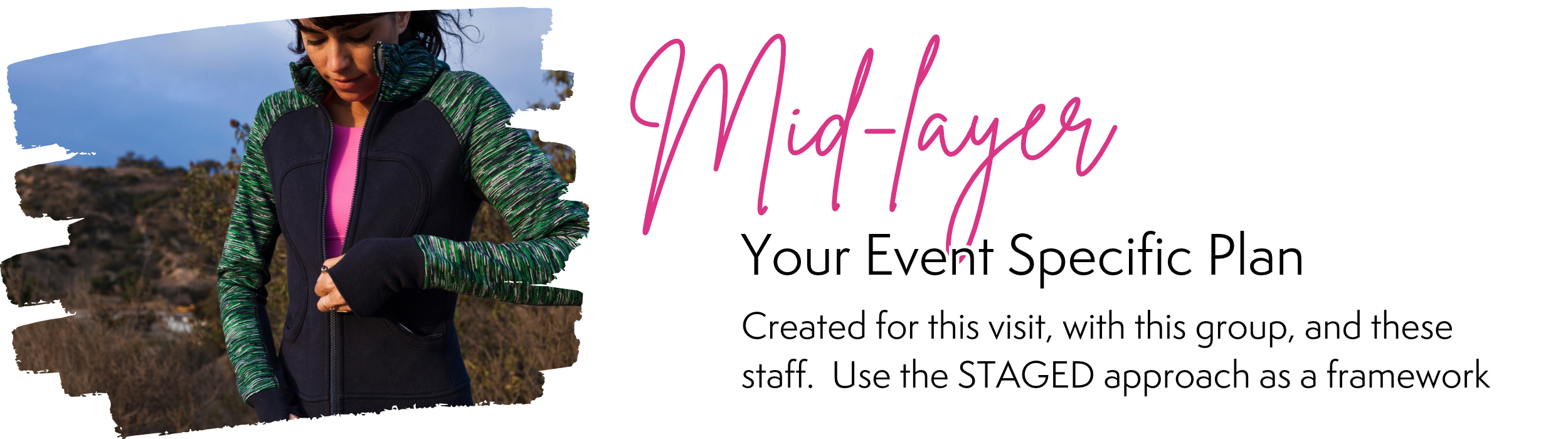
Your mid-layer is your Event Specific Plan, created for this visit, with this group and these staff. The STAGED approach is a reliable way to build it and a great structure for team planning meetings. Visit evolveadvice.co.uk/staged to learn more.

Outer Shell
Your outer shell is your dynamic risk assessment, which you can adjust throughout the visit as conditions change.
Each layer does a different job. Rely on just one and you'll either be weighed down or caught out.
Know who's leading what
Before you start, be clear about which parts of the visit your staff or the provider are leading.
If a provider leads an adventurous activity, such as canoeing, they're responsible for assessing its risks. A Learning Outside the Classroom Quality Badge gives you reassurance that they meet the right standards, while providers without one will need to give you more information.
You always remain responsible for the rest of the visit, from the coach journey to supervising free time. Your duty of care isn’t delegable so ensure that your risk assessment covers these times too.
Ask the right questions
A good risk assessment answers three questions. Who is at risk? What could go wrong? How will you manage it? Name the people involved, including the adults, since staff can be affected too.
Focus on hazards that are significant for this group in this place. A useful test is to ask, "Would this change what we do?" If not, it probably doesn't need writing down. Then be specific about your controls. "Staff to supervise closely" tells a colleague very little. "Two staff positioned at the kerb while the group crosses in pairs" is something they can act on.
Aim for a balance of preventative measures, which help prevent things going wrong, and reactive ones setting out what you'll do if they do. Agree trigger points in advance, such as the wind speed at which an activity stops and have a plan B ready. That gives leaders clear direction when decisions need making on the day.
Make it a shared plan, and learn from it
A risk assessment is only useful if the people leading the visit understand and use it. Talk it through together as a team, because colleagues who have helped shape a plan are far more likely to follow it. They'll also be better prepared to think on their feet when things change.
Young people can be part of this too. When you explain why the group stays together on the cliff path, they start to take ownership of their own safety. That's a valuable learning outcome in its own right.
After the visit, take a few minutes to reflect with your team. Did the plan match reality? Noting what you learned and updating your plans means the next visit starts from a stronger place.
Risk assessment isn’t a hurdle to clear, it’s your secret to success
Seen this way, risk assessment isn't a hurdle to clear before the good stuff begins. It's the foundation the whole visit rests on. Like good outdoor kit, a well-thought through plan lets everyone stop worrying about the conditions and focus on the learning and enjoyment that made the visit worth planning in the first place.
If you need help with planning and risk assessment, or support with making reasonable adjustments, ask your Educational Visits Adviser. We’re here to help.

Helena Cresswell
Helena is Associate Educational Visits Adviser at EVOLVE Advice. She advises EVC on all aspects of educational visits planning and risk management reviews and signs off overseas, residential and adventurous visits for EVOLVE Advice clients, and regularly delivers EVC and Visit Leader Training.
Do you want to hear more advice and updates like this? Sign up for our Educational Visits Essentials emails.
Further Reading
OEAP National Guidance at oeapng.info - 4.3 Risk management - an overview
Beyond the Gates Educational Visits Guidance - employer guidance from EVOLVE Advice - 2.1 Risk Management for Educational Visits
EVOLVE Advice clients can find guidance on risk assessment in Beyond the Gates, ask eva! through their EVOLVE site, or email our team at advice@evolveadvice.co.uk.
This publication is a general summary of guidance. It should not replace advice tailored to your specific circumstances. ©️EVOLVE Advice 2026
If you’d like further support on this issue, or advice on other aspects related to educational visits, speak to your Educational Visits Adviser.